AX Transformation Consulting Training
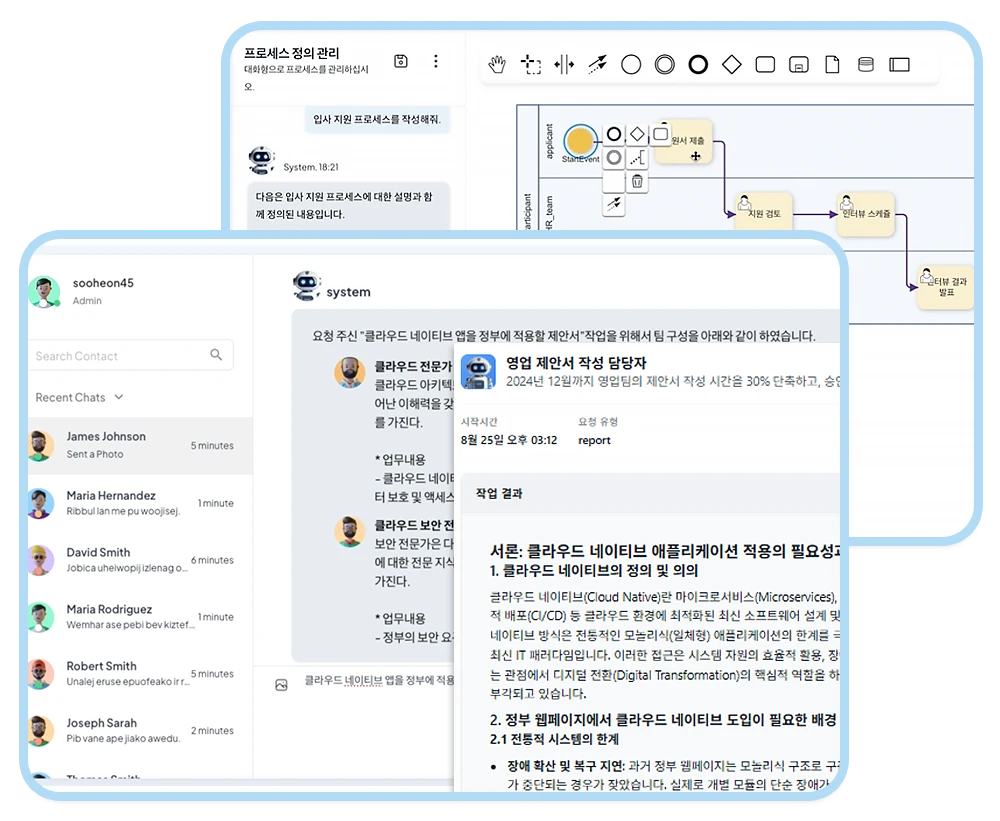
Why AX Transformation
Essential Capabilities for Becoming a One-Person Startup or an AI-Native Enterprise
What the companies on the Lean AI Native Leaderboard have in common is that they treat AI as their core means of production and have pushed revenue per employee to extremes. Telegram generates about KRW 48.3 billion per employee with 30 people; Midjourney about KRW 18.1 billion per employee with 40.
For 20 years, uEngine has been answering one question: ‘how do you grow results without growing headcount?’
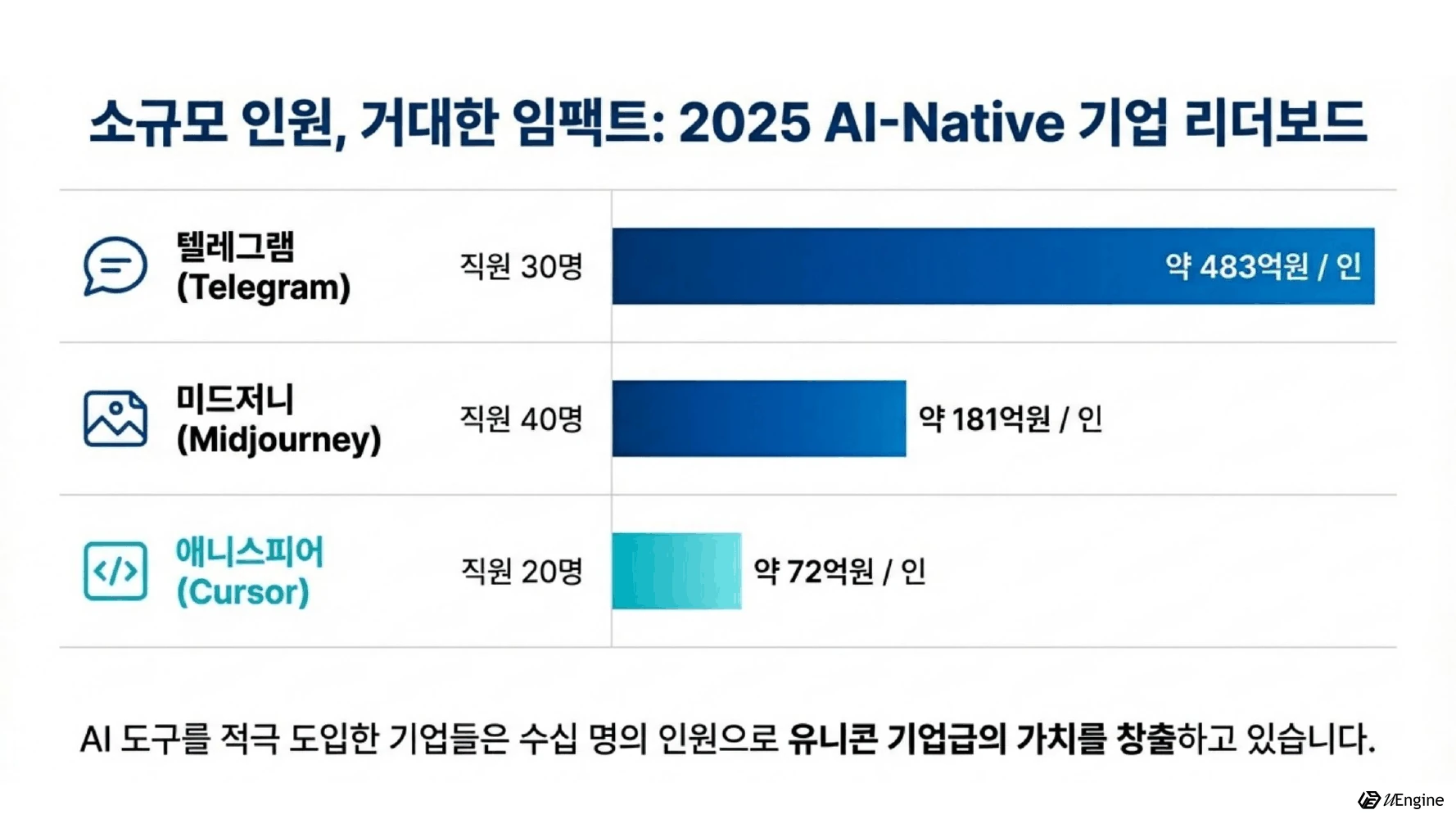
Few People, Massive Impact
Telegram (30 people, about KRW 48.3 billion per employee), Midjourney (40 people, about KRW 18.1 billion per employee), Cursor/Anysphere (20 people, about KRW 7.2 billion per employee). This is no accident; it is the result of designing product, distribution, and operations as software from day one.
Selling a narrow, well-defined problem as a complete outcome, like ‘code completion’ or ‘resolving customer inquiries’, is the starting point for a one-person startup to deliver the results of a 100-person company.
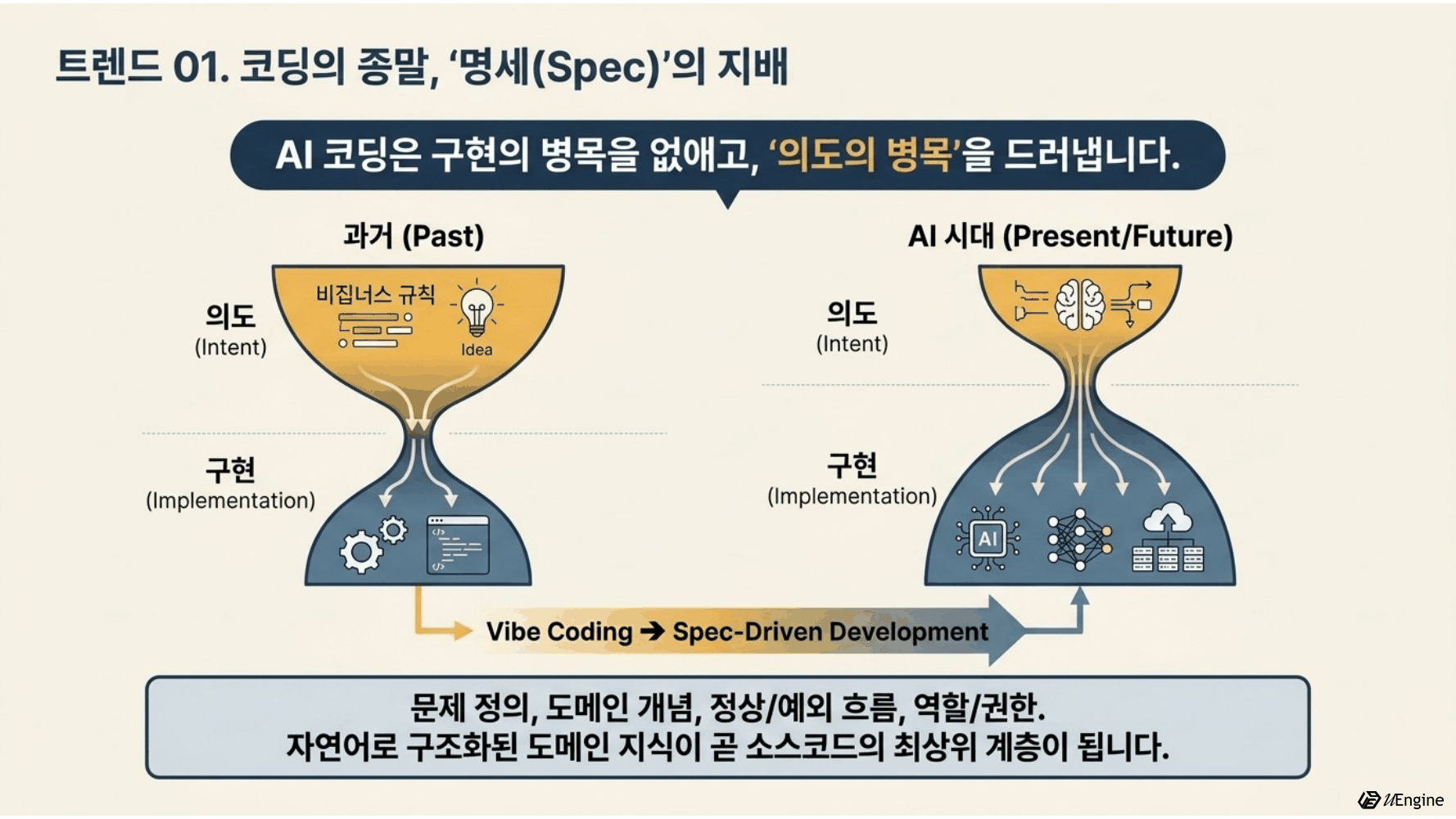
The Spec, Not the Code, Is the Core Asset
AI coding capability is doubling every 70 days (5x faster than Moore's Law). The implementation bottleneck disappears, leaving only ‘the bottleneck of intent’.
In an era when one person can build a product alone, the only differentiator is the shift from Vibe Coding → Spec-Driven Development: the ability to specify precisely what to build. This is the central axis running through both tracks of this training.
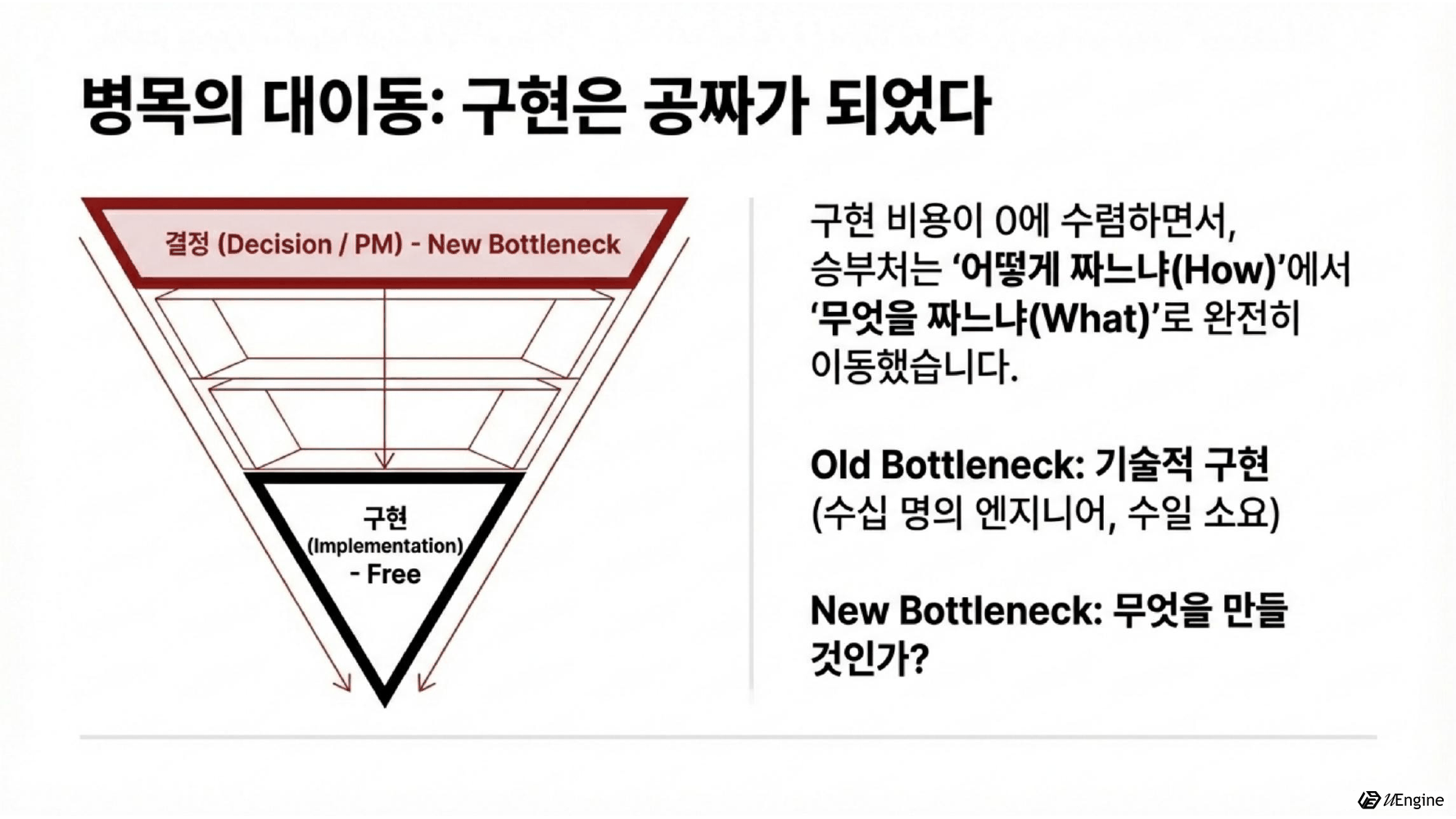
Automate Before You Hire
As implementation costs converge on zero, the battleground has moved from ‘How’ to ‘What’.
The principle of a lean AI-native company is simple: eliminate unnecessary steps, standardize inputs and outputs, handle the work with existing SaaS and AI, and hire people only for the bottlenecks that remain. People are the most expensive judgment resource, not a resource for repetitive processing.
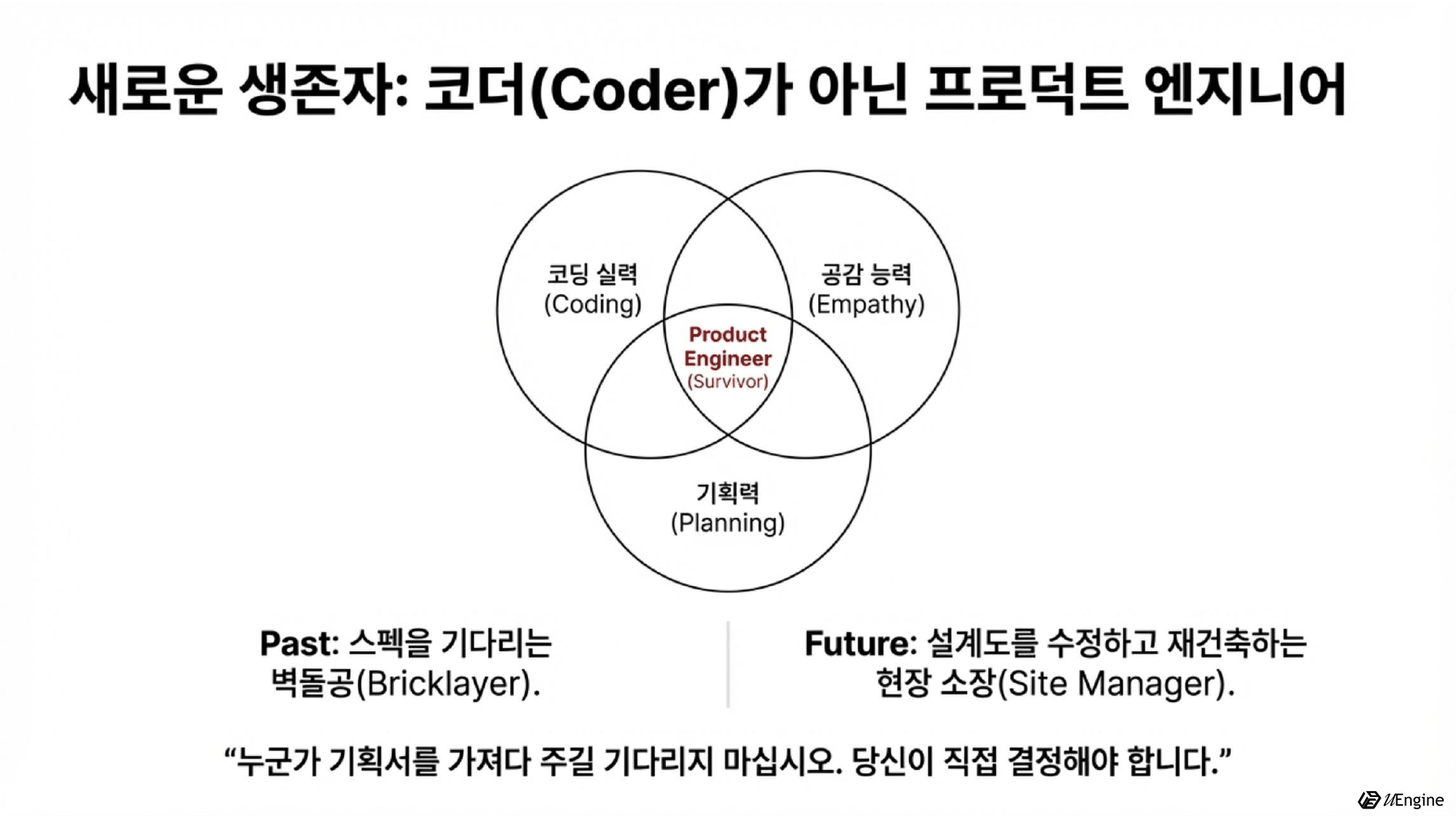
A Few Senior Generalists Own Multiple Functions
The ‘product engineer’, at the intersection of coding skill, empathy, and product sense, is the survivor of the AI era.
In small teams, the cost of handoffs between roles is fatal. What is needed is talent that defines the problem and executes it directly, reads data and customer feedback, and takes end-to-end responsibility for outcomes, and for them to work, policies, history, and documents must be managed as centralized knowledge rather than scattered.
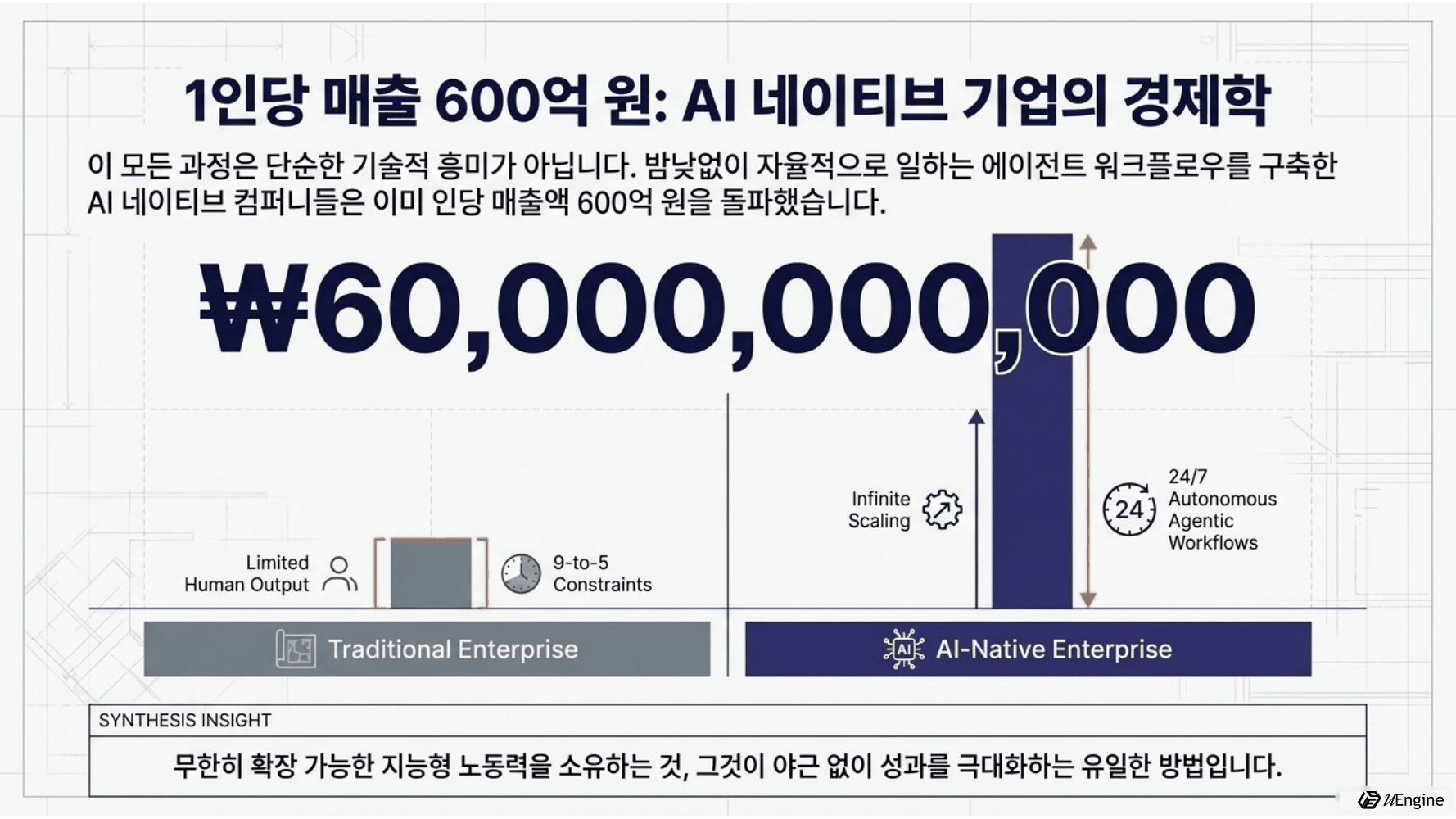
Revenue per Employee Is the New Management Metric
AI-native companies that have built agent workflows working autonomously around the clock have already surpassed KRW 60 billion in revenue per employee.
Going forward, the metrics that matter are not headcount or total revenue but contribution margin per employee, automatic resolution rate, human intervention rate, experiment velocity, and time to customer value.
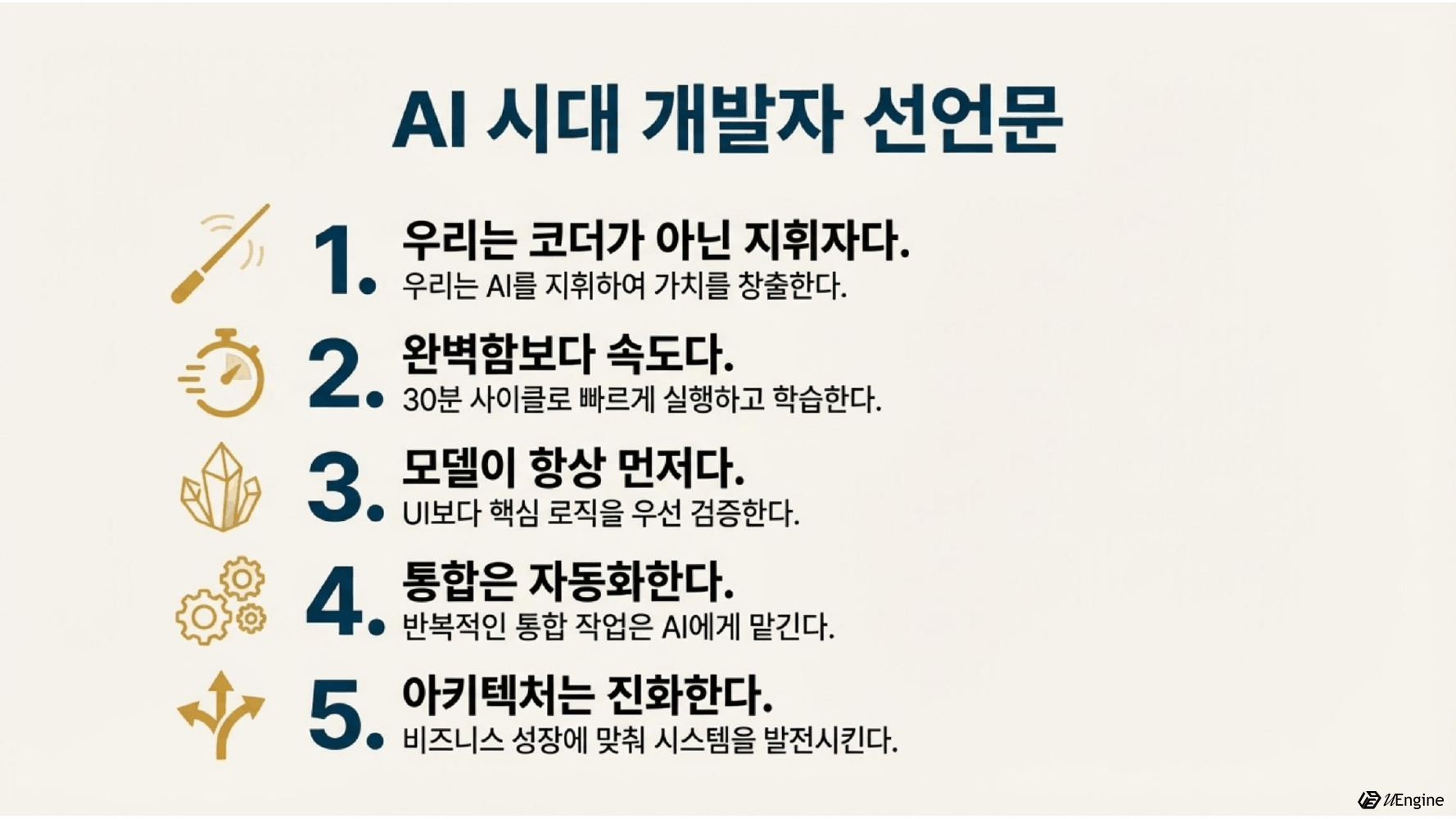
Developer Manifesto for the AI Era
① We are conductors, not coders ② Speed over perfection (30-minute cycles) ③ The model always comes first (core logic before UI) ④ Integration is automated ⑤ Architecture evolves.
This training uses these five declarations as the practical standard for both tracks.
All of these capabilities converge on a single question: “Am I (or is my organization) ready to grow revenue without growing headcount?”
The AX Transformation Consulting Training connects the executive decision-making track and the development implementation track into one flow, so we build that answer together.
AX Transformation Consulting Training, 2 Tracks
A business track and a development track connected by a shared language, the ‘Spec’, so the entire organization executes AX transformation in the same language.
AI Adoption Strategy & Frontier Firm Transformation
4 days (28 hours) · For executives and innovation team leaders at Korean companies
AI Assistant → Digital Colleague → Autonomous Operation → Frontier Firm transformation
- Organizational transformation roadmap based on the Microsoft Work Trend Index 2025
- How to turn the ‘spec’ into an organizational asset with Process GPT work charts
- Compliance with the AI Basic Act (2025) & a 24-month ROI action plan
Spec-Driven Development & Building the ProcessGPT Platform
Master course on building enterprise AI agent systems on open source
Agentic AI fundamentals → MCP → A2A → multi-agent → integrated deployment
- Turn domain specs into executable code with the ‘Spec-First’ methodology
- BPMN-based process engine + hands-on MCP and A2A protocol labs
- Vendor-lock-in-free architecture design grounded in the Robo Architect philosophy
Program Highlights
Spec-Driven Development
Automation-before-hiring principle
Frontier Firm Transformation
MCP and A2A Multi-Agent
Korea AI Basic Act (2025) Compliance
Real Cases from Major Korean Enterprises
Detailed Curriculum
A hands-on, four-day program based on the Microsoft Work Trend Index 2025 that raises AI adoption maturity across your entire organization
Day 1. AI Assistant Stage – Personal Productivity Transformation
Key Learning Content and Activities (Concepts)
• Mastering AI Assistant tools in practice: comparing ChatGPT, Claude, Gemini and Copilot
Hands-on Labs
• Ready-to-use worksheets and performance measurement
Day 2. Digital Colleague Stage – Work Chart Transformation
Key Learning Content and Activities (Concepts)
• MCP integration and Open WebUI connectivity
Hands-on Labs
• Cross-department collaboration lab project
Day 3. Autonomous Operation – The Agent Boss in Practice
Key Learning Content and Activities (Concepts)
• Neo4j knowledge graph and Supabase real-time dashboard
Hands-on Labs
• Scenario: managing 10 AI agents at once
Day 4. Frontier Firm Transformation Strategy and Compliance
Key Learning Content and Activities (Integration)
• An operating framework compliant with the Korea AI Basic Act
Hands-on Labs
• ‘Spec handover’ workshop with the Track B development team
* Some course content may change depending on circumstances.
Detailed Curriculum
A hands-on program in which you build the Process GPT open-source platform yourself using the Spec-First methodology
Chapter 1. Agentic AI Fundamentals & ProcessGPT
Key Learning Content and Activities (Concepts)
• Microsoft's three stages of agentic AI adoption
Hands-on Labs
• Declaring and training agents, generating processes
Chapter 2. Building MCP-Based Tools
Key Learning Content and Activities (Concepts)
• The FastMCP framework
Hands-on Labs
• Client debugging
Chapter 3. Building A2A-Based Agents
Key Learning Content and Activities (Concepts)
• The mem0 memory system
Hands-on Labs
• Converting ProcessGPT processes to A2A
Chapter 4. Building a Multi-Agent System
Key Learning Content and Activities (Concepts)
• The CrewAI framework
Hands-on Labs
• Human-in-the-Loop
Chapter 5. Integration and On-Premises Deployment
Key Learning Content and Activities (Integration)
• Validating a vendor-lock-in-free architecture per the Robo Architect philosophy
Hands-on Labs
• Kubernetes deployment
* Some course content may change depending on circumstances.
What You Gain After Completion
Accelerated digital/AX transformation for your company
The ability to manage specifications as organizational assets
Skills to build and customize an open-source AI agent platform
Cost optimization through open source & a trust-based commercialization strategy
Course Information
Both tracks can be registered for separately. When executives and the development team from the same organization attend together, the shared language of the ‘spec’ maximizes the synergy.
Audience: Korean corporate executives and innovation team leaders
Audience: Python developers at beginner level or above, technical staff evaluating platform adoption