Loading...
Skip to Content

Our Products

uEngine6-BPM

uEngine is a platform supporting SOA MM Level 7, covering everything from BPM-based architecture analysis to operations automation in one place

uEngine6 BPM is a Business Process Management System (BPMS) built on the latest cloud-native architecture, equipped with the ability to automate process definition, form generation, and application integration through Process GPT, uEngine's AI edition. This AI capability handles complex processes automatically, fully automating everything through the execution stage without direct user intervention.

Using an Event-Driven Architecture (EDA), it minimizes dependencies between services, synchronizes application progress, and manages everything without cascading failures. It also models automated retries, compensation, and timeouts for system integrations, reliably handling the transaction processing that is typically so complex in a microservices architecture.

Built on LLM AI technology, it performs process modeling, form generation, and more automatically through natural-language processing, effectively supporting a wide range of business requirements including system integration. uEngine6 BPM is the ideal solution for enterprises looking to move to cloud-native and microservices architectures.

FEATURES
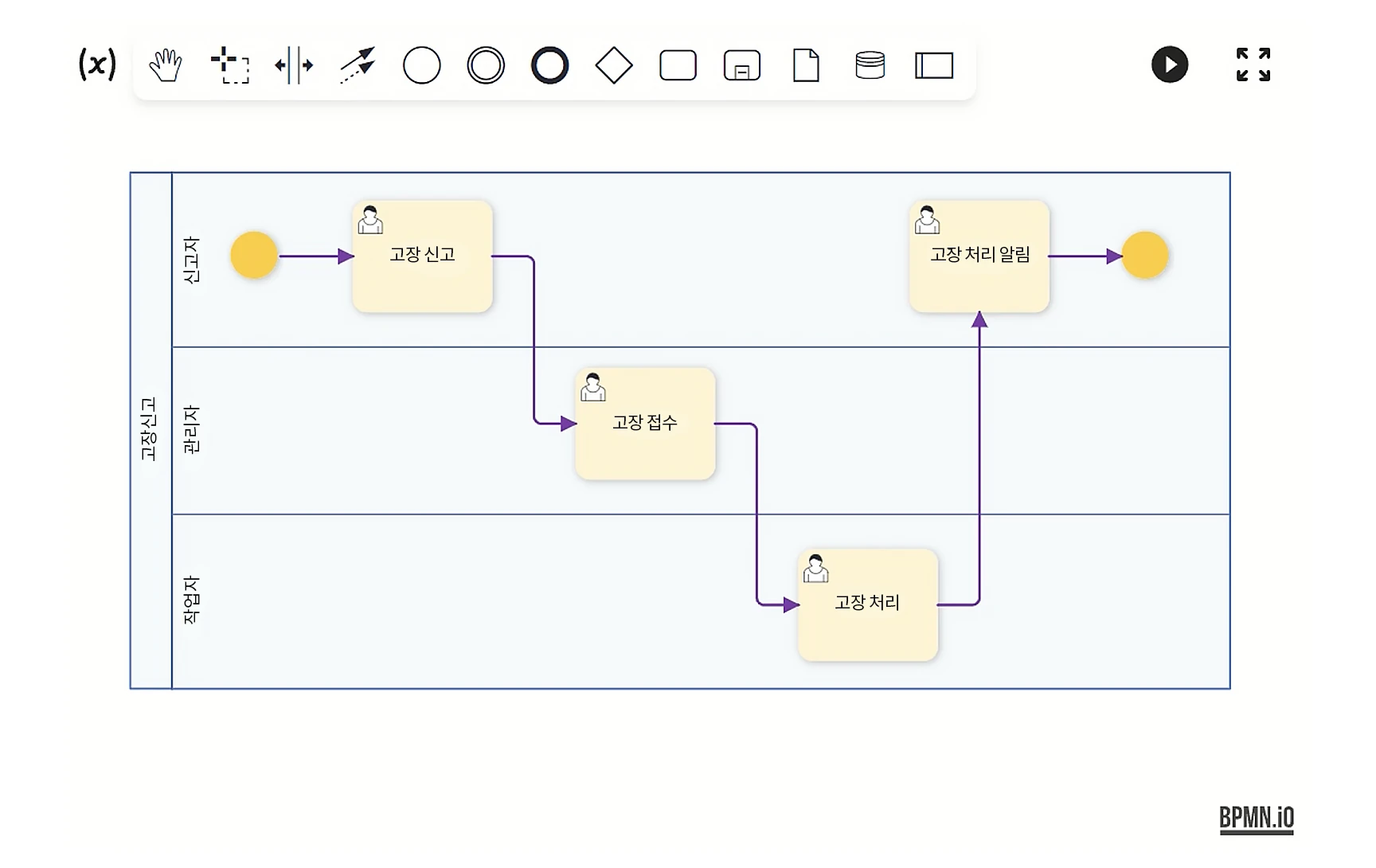
Image Description

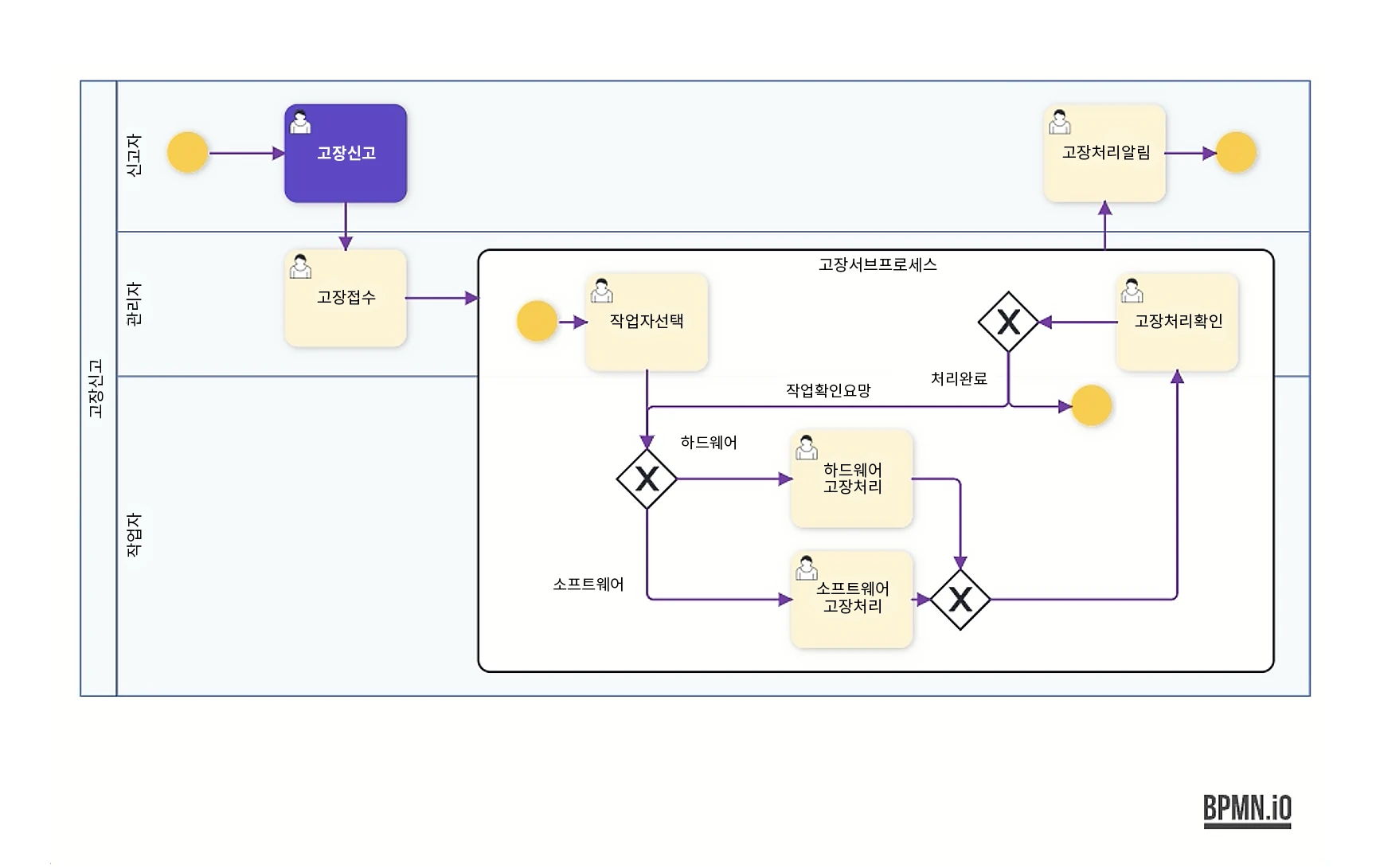
Full Support of BPMN 2.0

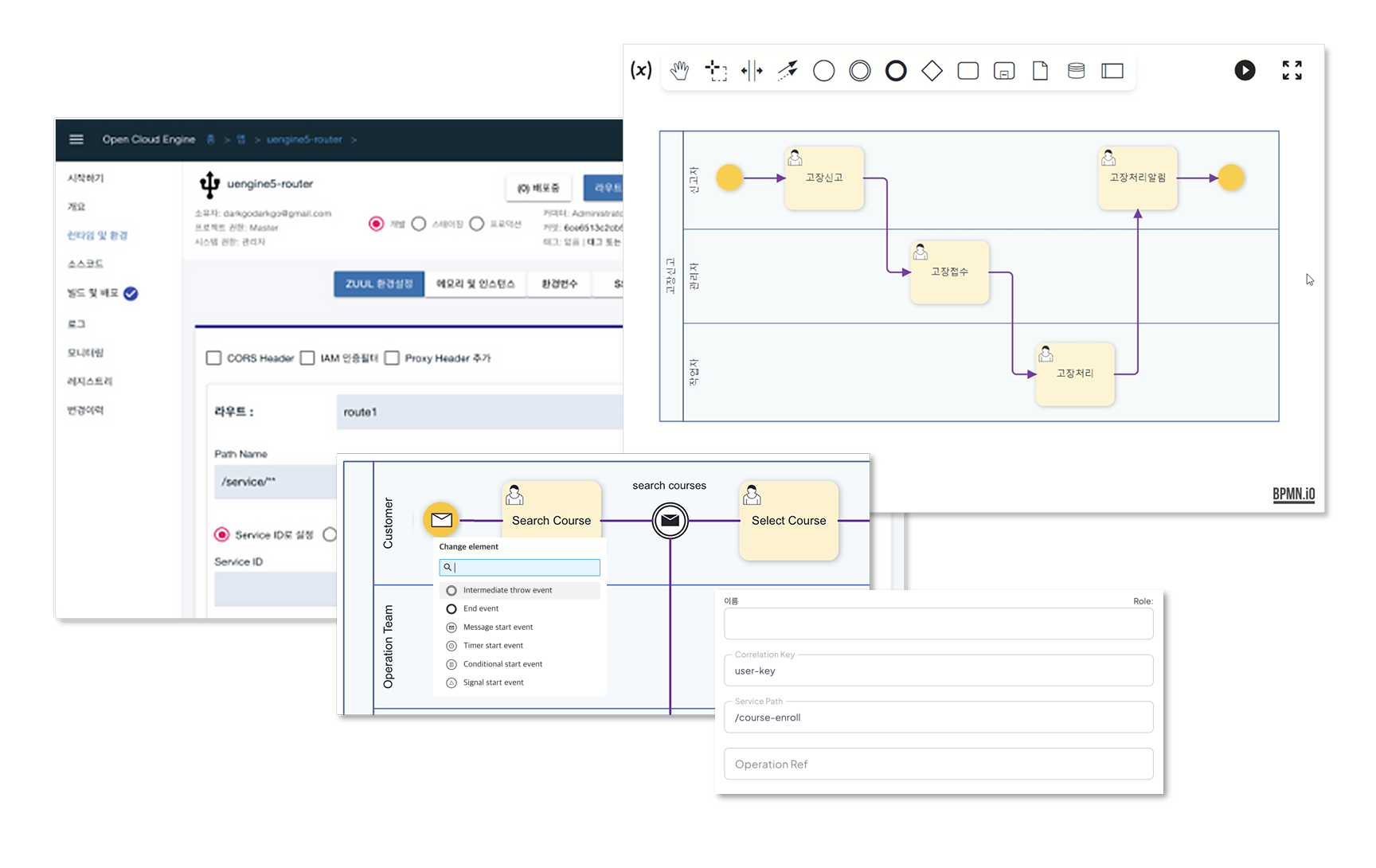
uEngine6 fully supports the OMG BPMN 2.0 specification, providing process orchestration that efficiently mashes up microservices running on OCE and exposed as REST APIs. You can also create simple process-based REST microservices using nothing but pure BPMN.
Image Description

Subprocesses

Multi-instance processing with subprocesses
- Multiple Instance (MI) is an advanced process execution feature in which the number of executions of a given section is determined at runtime. To specify MI, a SubProcess defines the scope of the MI execution section; when you set a process variable holding the triggering values (an array) in the SubProcess configuration, MI is generated dynamically, repeating in Parallel or Loop mode once for each value in that variable.
Image Description

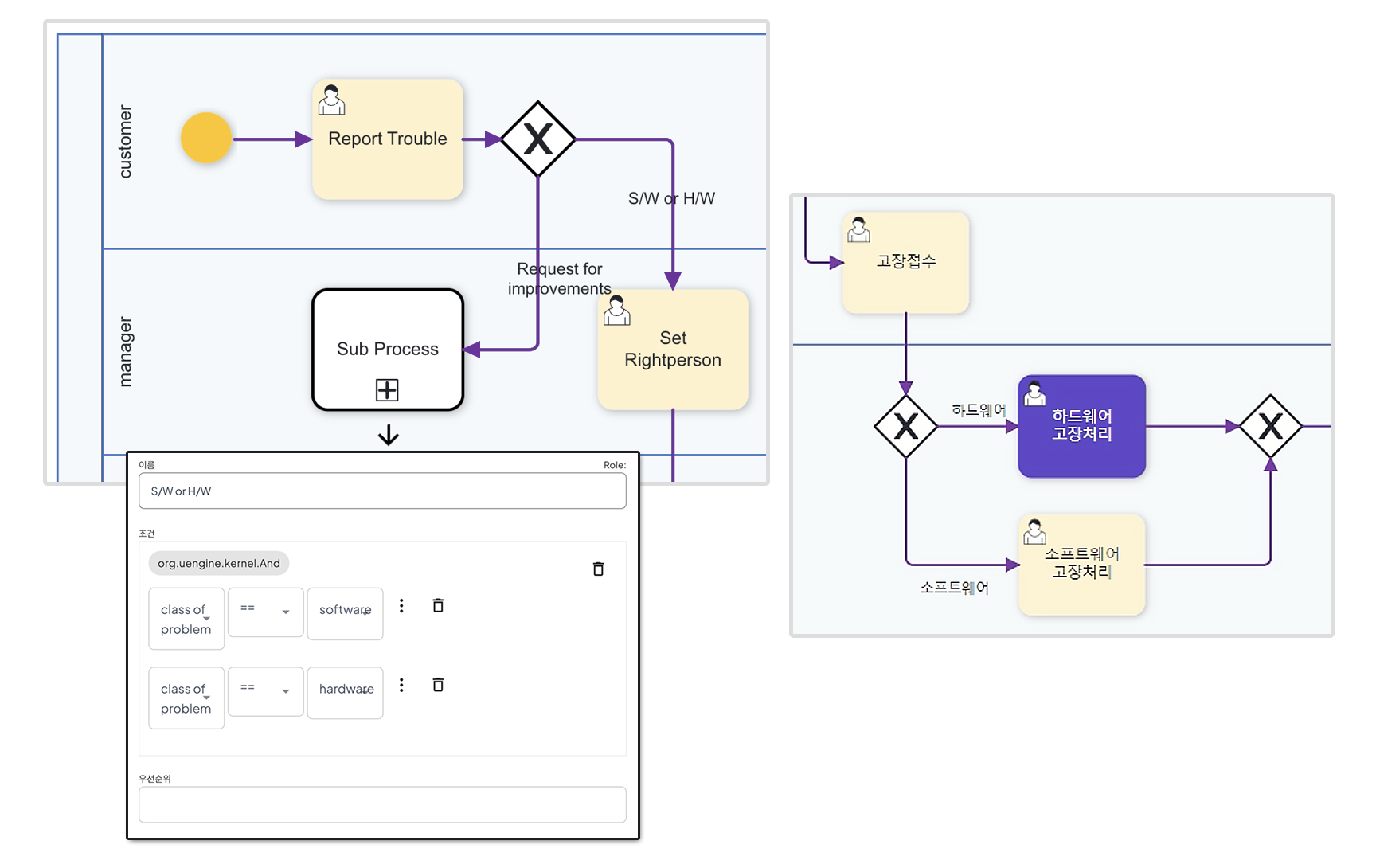
Conditional branching

Process branching with gateways
- Gateways let you model conditional branches and define rules, from simple process-variable comparisons to complex And / Or combinations.
Image Description

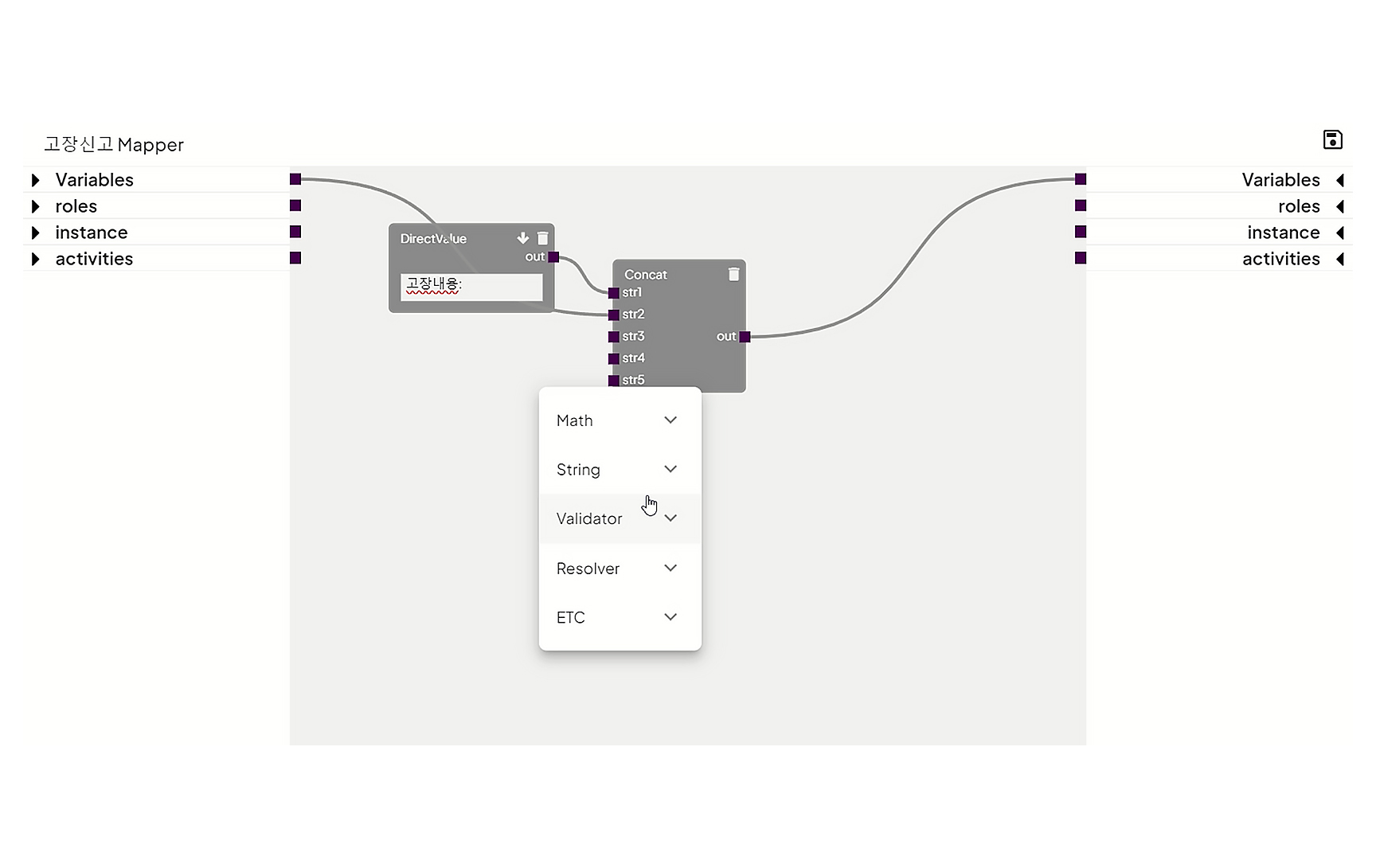
Form mapping

Data transfer between activities using the Data Mapper
- A configuration tool for linking and transforming data across different schemas, enabling integration with other tools (i.e. Legacy Systems) during process execution
Image Description

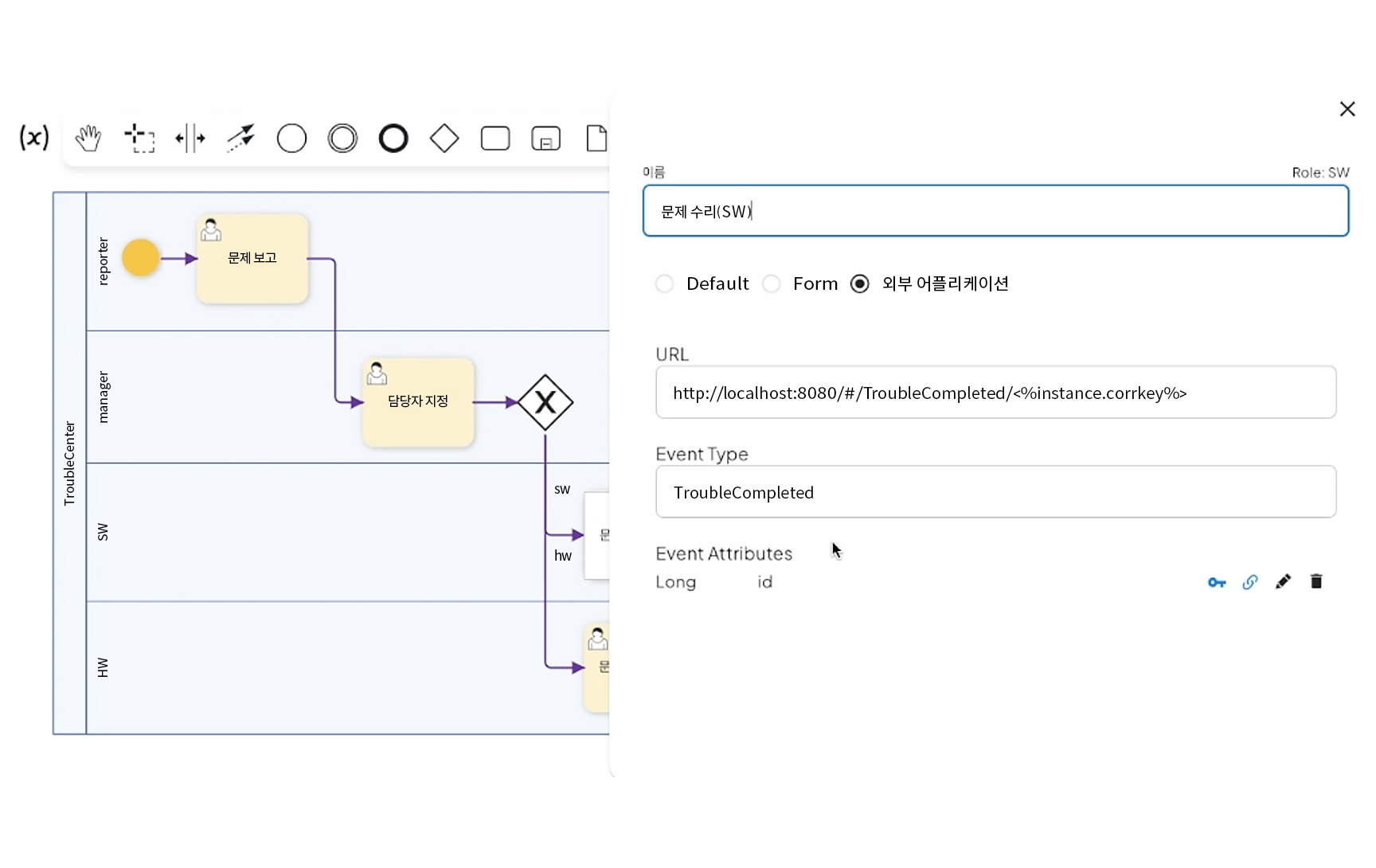
Event-based system integration

Image Description

Message-based system integration

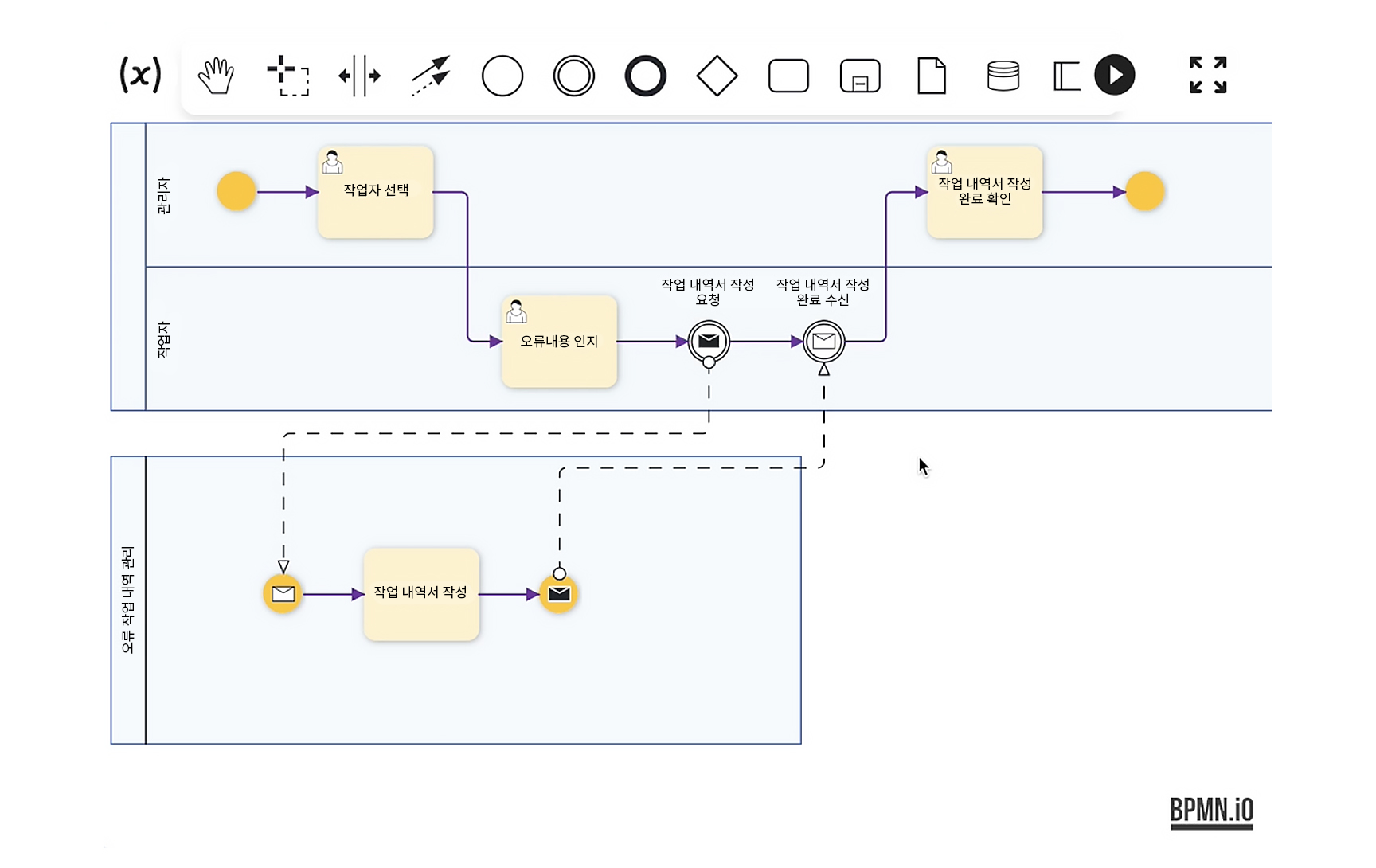
Integrating uEngine6 with external systems over REST APIs using BPMN's two Message Event notations
Image Description

Other features

01. AI Support - Process GPT
✔ Using a public or private LLM (ChatGPT4 or llama3), process definitions, form definitions, and organization charts can be defined automatically via chat or image upload.
✔ This lets even BPMN beginners easily compose process definitions and work screens and put them to use quickly.
→ Learn more about Process GPT, the AI edition
02. Exposing Process as REST Services
✔ Control security, integration, and performance on the paths through which microservices are accessed from outside. APIs required for new business needs can be created by mashing up existing microservice assets.
✔ Expose created processes directly as REST APIs or Kafka Event Consumers
✔ Create service endpoints by specifying the service Endpoint
✔ Correlation between callers and process instances
03. Process Execution & Monitoring
✔ Simulate & debug modeled processes
✔ Automatically generate the handling screen when the role is a person
✔ Display the call Payload and result for microservice calls
✔ Check logs on the process when an error occurs & restart from the point of failure or recover to the previous step
✔ Promote to production once simulation is complete



Success Stories

Case Studies

uEngine BPMS case studies proven across finance, insurance, public institutions, manufacturing/construction/logistics, IT, telecom, and more

Finance & Insurance

Applied across business areas including personal/corporate/project-finance lending, credit review, new product development, compensation, and claims adjustment

Public Institutions

Realizing e-government through standard processes for each function and efficient integration with legacy systems

Manufacturing / Construction / Logistics

Electronic approval features ranging from simple acknowledgments to approvals governed by complex rules

IT & Telecom

Eliminating duplicate work, maintaining transparency, building a foundation for performance management, and standardizing enterprise-wide processes

Our Values

Why did uEngine open-source its BPM product?
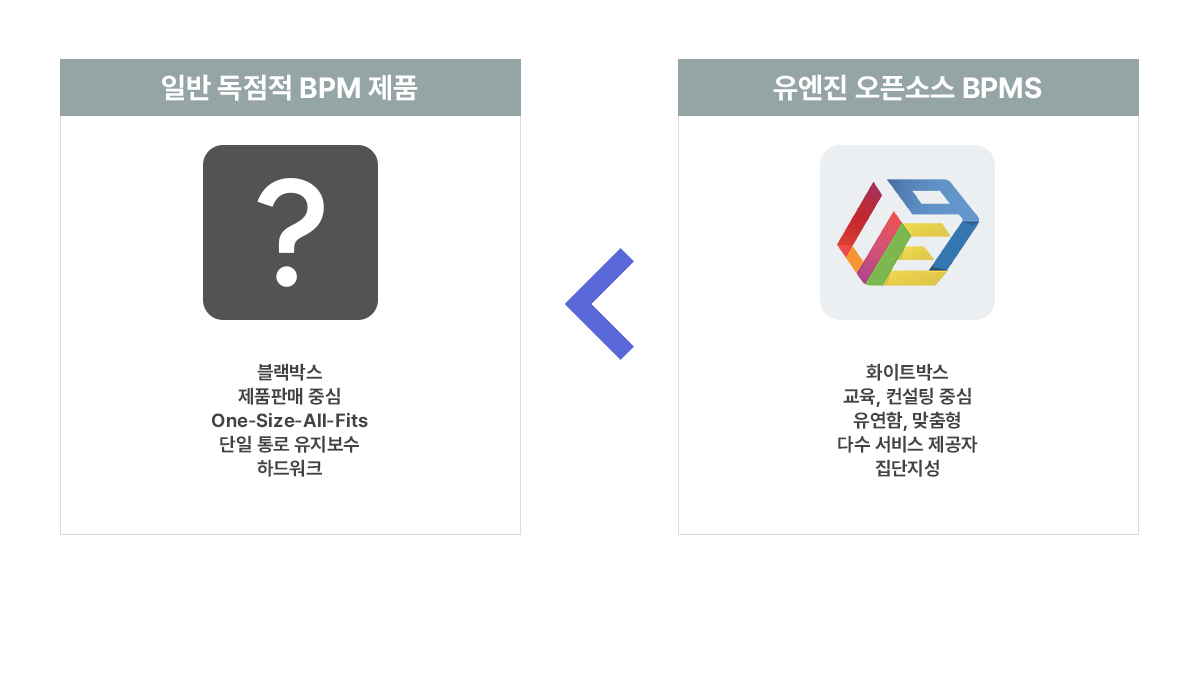
Image Description

The uEngine BPM project offers as open source a BPMS product that was previously accessible only through expensive licensing fees, together with training and consulting services for adopting it. This enables thorough training and internalization through a consulting-centered budget structure, faithful customization centered on customer requirements thanks to the availability of source code, and multiple service channels. Among the considerations for BPM adoption, the technical ones come down to how easily the product can be customized and how easily it can be integrated into your organization's system environment without undue burden. To achieve this customizability and low-risk integration, the uEngine BPMS architecture applies IoC (Inversion of Control), the approach of an "object-oriented component framework," and the concept of "design reuse." It provides component interfaces such as separation of org-chart lookup logic, componentized activity types, and listeners for engine events, forming a refined boundary between BPM hot-spot services (fixed parts) and frequently customized BPM elements (variable parts). As services of the fixed parts, it provides foundational capabilities such as automatic generation of activity component UIs via reflection, instance data management, MQ handling, and OLAP analysis, so developers can customize easily without ever having to worry about the underlying BPM technology. This approach applies the same approach already used by Spring Framework and various other frameworks to the domain of BPM-based system development, providing a technical foundation that dramatically reduces the risk of BPM products that are typically offered only as packages allowing Server/Client integration, and maximizes availability.


Related products

Beyond uEngine6 BPM: the AI editions

uEngine6 BPM is the engine that defines and executes workflows for people and systems. Add Process GPT, where AI agents become the executors of work, and uEngine RPA, which takes over screen-level repetitive tasks, and design → execution → automation connect into one.
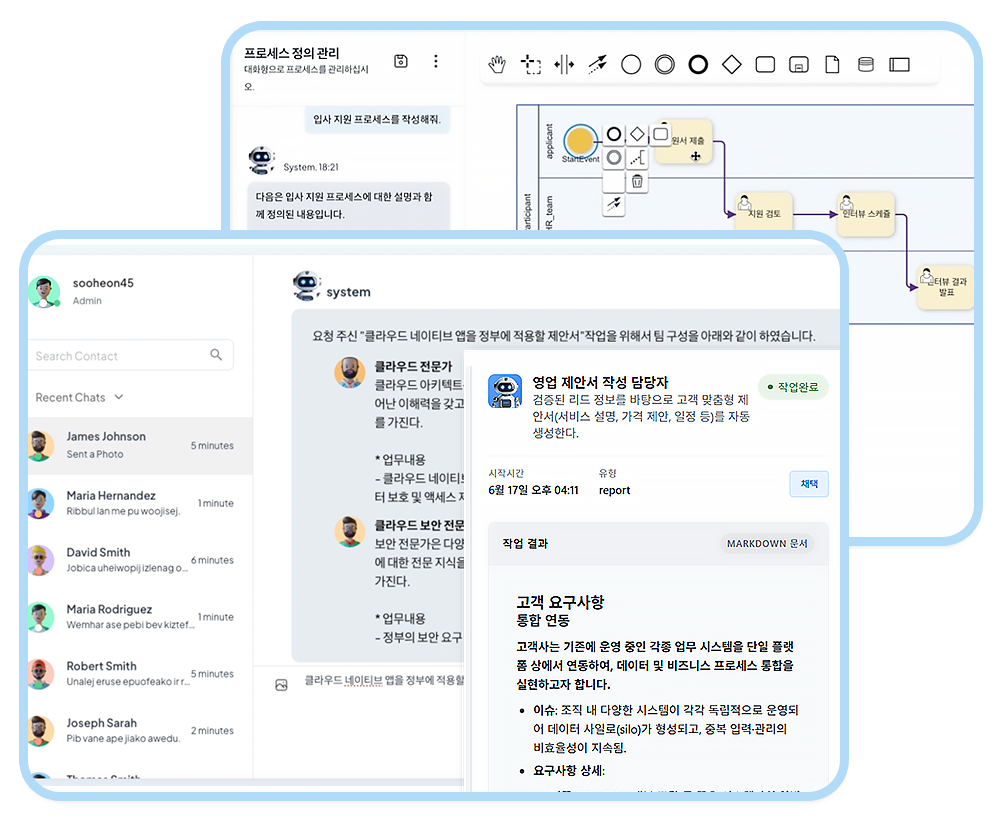
Process GPT — Enterprise AI Agent Process Platform

Process GPT — AI edition

Generate BPMN processes from a single line of natural language, and let AI agents perform tasks in place of people. It attaches MCP·A2A multi-agents to the workflows you have formalized with uEngine6 BPM to autonomously execute end-to-end work: the AI edition of uEngine6 BPM.
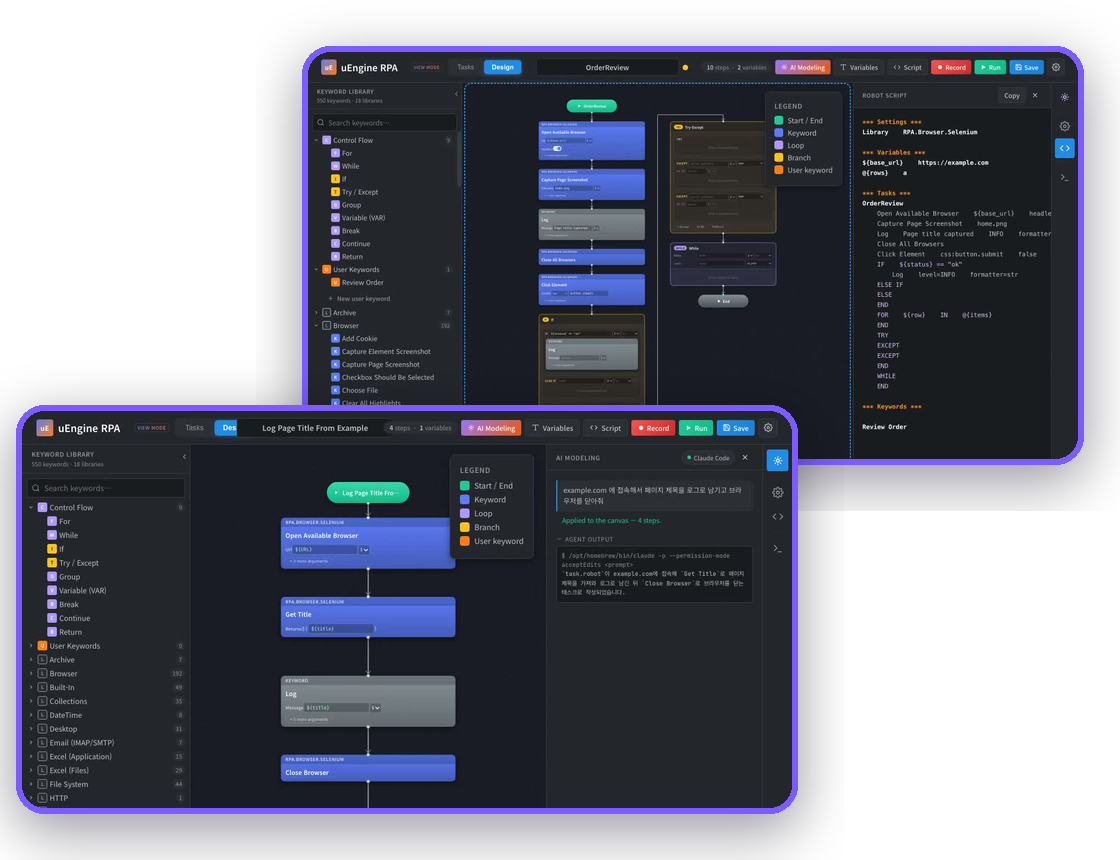
uEngine RPA — Work Automation You Create by Talking

uEngine RPA — execution automation

It handles the last-mile repetitive tasks of a process in place of human hands. Describe what you want automated in words, and the AI builds the automation script; from then on it runs repeatedly with no AI invocation cost. It is especially useful for connecting systems without APIs, such as legacy screens, to a process.


License

uEngine Open Source License : LGPL

Comparison of major
open-source software licenses
Free
to use
Distribution
allowed
Source code
available
Source code
modifiable
Derivative works
must be re-published
Can be combined
with proprietary SW
GPL O O O O O X
LGPL O O O O O O
MPL O O O O O O
BSD
Licence
O O O O X O
Apache
Licence
O O O O X O

1) Derivative works must be re-published, but not in their entirety (per the "Can be combined with proprietary SW" item); only the portions of uEngine modified for your own needs must be published on sf.net or similar.
2) Since modifications are usually made at the level of configuration files within uEngine, source code changes generally do not occur, though a requirement to modify the splash screen of the admin console may arise.
3) If you do not wish to re-publish any part of your derivative work, you can purchase a commercial (closed-source) license under the "dual licensing" policy.
4) To use uEngine at no cost: - publish the source code modified within uEngine on sf.net - or, without modifying uEngine's source, indicate on the user interface or elsewhere that uEngine is used
5) To protect your source code: - purchase a dual license (commercial license). Source: Korea Copyright Commission: http://www.olis.or.kr/osslice/guideViewComp.do